Search "Lincoln Square home prices" and you'll find a $491,000 median from one source, a $375,000 median from another, and a headline claiming the average house price jumped 98.7 percent in a single year. None of these numbers are wrong. They're measuring different things and calling it the same neighborhood.
That instability isn't a data glitch. It's the most honest thing anyone will tell you about Lincoln Square. This is not one housing market wearing one price tag. It's at least three markets sharing a Brown Line stop, a Master Plan, and a marketing boundary, and the number you see depends entirely on which one happened to transact the month someone pulled the data.
Different Housing Types Sharing One Median
Walk the boundary of Lincoln Square and you'll pass a $200,000 vintage one-bedroom condo, a $1.2 million rehabbed greystone, and a brand-new construction single-family listed above $2 million, sometimes on the same block. Condo listings in the neighborhood have recently ranged from roughly $136,900 up to $415,000. Established single-family homes that haven't been touched in decades sell anywhere from $300,000 to $1.3 million depending on condition and lot. New construction single-family homes start closer to $975,000 and run past $2.3 million.
A median is supposed to describe the middle of a market. When the market itself is split into several populations that barely overlap, the median stops describing anything real. It just reports whichever population happened to close more sales that particular month. That's why Redfin's Lincoln Square page reported a median sale price of $491,000 for March 2026, down more than 21 percent year over year, while the same page's separately updating "average house price" figure, which reflects more recent closings, showed a number nearly double that. Both numbers are accurate reads of what closed. Neither is a stable measure of "what a home costs here," because "here" isn't one product.
Here's roughly how that split breaks down by what's actually on the market:
| Housing type | Typical price range | What it tells you |
|---|---|---|
| Vintage condos | $136,900 to $415,000 | Smallest units, fastest turnover, most exposed to rate swings |
| Established single-family | $300,000 to $1.3 million | Wide range driven by renovation state and lot size |
| New construction single-family | $975,000 to $2.3 million+ | A different buyer pool entirely, competing with Lincoln Park and North Center |
| Vintage 2-4 flats | Varies, often bought for owner-occupancy plus rental income | Shrinking category, discussed below |
If you're comparing "Lincoln Square" to another neighborhood using a single median, you're really comparing whichever slice of that table happened to sell most that quarter.
The Two-Flat That Becomes One House
The category doing the most quiet damage to that median is the vintage 2-flat, and not because it's disappearing from the map. It's disappearing from the multi-unit column.
For decades, the classic Lincoln Square affordability play was straightforward: buy a brick 2-flat, live in one unit, rent out the other, and let the tenant cover a meaningful share of the mortgage. That's still a real strategy here, and it's part of why 2-4 unit buildings remain common throughout the neighborhood.
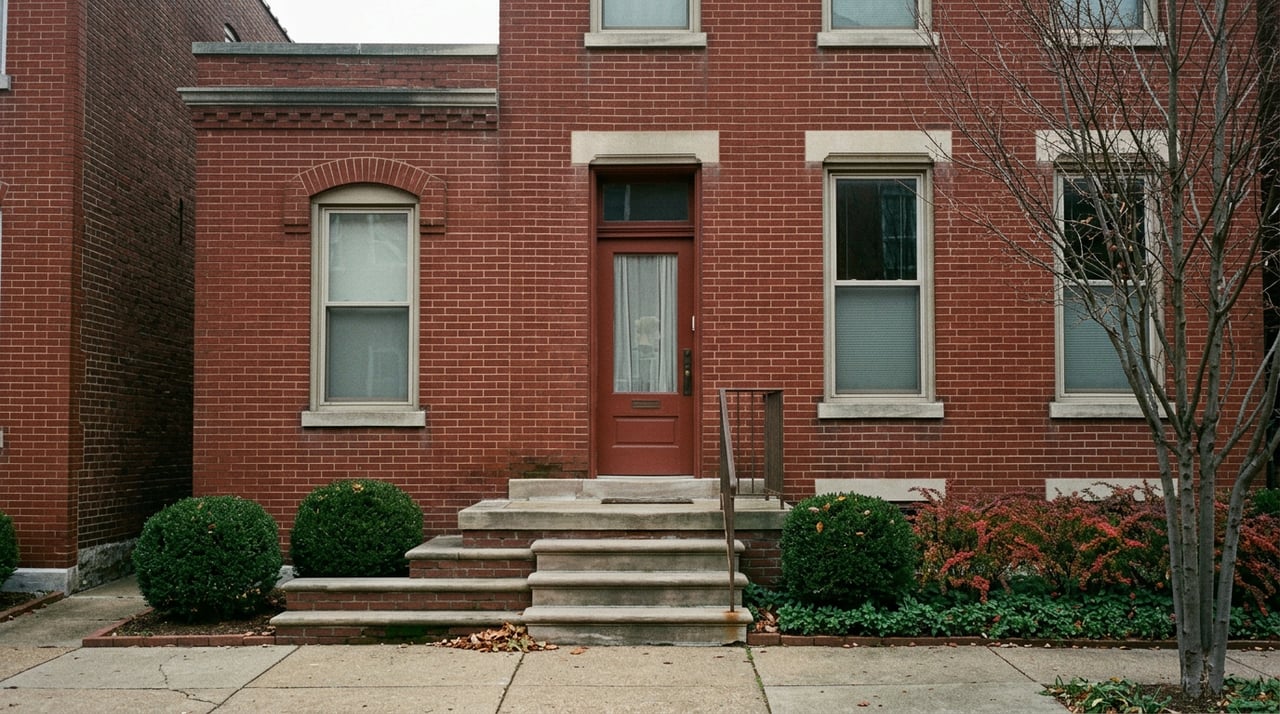
But a growing number of these buildings are being bought and gutted into single-family homes instead. Fosterdale Architects, a Chicago firm, has documented exactly this kind of project in Lincoln Square: taking a brick two-flat and converting the first and second floors into one open home, complete with a new rear garage, a paved patio, and a reconfigured kitchen-to-den layout, while preserving the original front stair and entry. The building doesn't leave the neighborhood's housing count. It leaves the affordable multi-unit column and reappears, priced as a single-family home, often well above what either of its old rental units cost separately.
Across enough transactions, that shift changes the mix reflected in the median: fewer multi-unit sales at the affordable end and more single-family sales at the expensive end, without removing the buildings from the neighborhood.
What's Rising Along Western Avenue Doesn't Show Up In The Median
At the same time the ownership side is quietly consolidating upward, the rental side is adding real supply, and it's happening on a specific, named, dated timeline.
A six-story, 73-unit building at 4640 N. Western Ave, with 15 units set aside as affordable, has cleared its final permitting hurdles and is expected to break ground in September 2026. The project sits between the CTA Western Brown Line tracks and Eastwood Avenue, and the parcel was rezoned in 2023 from B3-2 and B3-3 to the denser B3-5, a change tied to the goals of the 2019 Lincoln Square Master Plan and the Western Avenue Corridor Study.
That's not an isolated case. The Trieuth at Lincoln Square, a multi-phase development at 5029 N. Lincoln Ave, received its next construction permit in January 2026 for a five-story, 47-unit addition with ground-floor retail, following two earlier six-unit buildings already built next door. And in July 2026, developer MLV Properties presented plans to Alderman Andre Vasquez's 40th Ward office for a five-story, 37-apartment building at 2648-58 W. Lawrence Ave, on the site of the now-vacant building that used to house Goosefoot Food and Wine. Neighbors at that meeting pushed back, asking for more family-sized units and less parking rather than fewer apartments overall.
None of this shows up in a resale median, because these are rental buildings, not homes for sale. But they tell you where the corridor is headed, and they're happening over real objection. The Heart of Lincoln Square neighbors association has published a formal vision statement opposing teardowns and pushing for infill development that matches the size and footprint of existing housing stock, arguing that unchecked density changes the character that makes the neighborhood work as a walkable village. That tension between preservation and upzoning isn't settled. It's playing out permit by permit, right now, along Western and Lawrence.
Put the two mechanisms together and the shape of the market gets clearer. Ownership stock is consolidating upward as 2-flats convert to single-family homes. Rental stock is expanding along the commercial corridor through new multi-unit construction. The middle ground, the modestly priced multi-unit building that used to be the neighborhood's entry point into ownership, is being squeezed from both directions at once.
So Which Lincoln Square Are You Actually Shopping
The four names on Telequest's neighborhood map, Lincoln Square, North Center, Budlong Woods, and Bowmanville, aren't interchangeable versions of the same market either.
- Lincoln Square core, the blocks around the plaza and the Western Avenue corridor, is where the deconversion and new-construction pressure described above is concentrated. Expect the widest price spread and the fastest pace.
- Bowmanville, tucked north of Foster Avenue between Western and Ravenswood, carries its own identity and history, including a land-title mixup dating back to its 1850s founder, Jesse Bowman. It still leans toward bungalows and modest two-flats and has so far seen less of the tower-scale redevelopment hitting the Western Avenue spine.
- Budlong Woods, the quieter pocket further from the commercial strip, is mostly vintage two-flats and low-rise courtyard buildings, attracting buyers who want Lincoln Square's transit access without its busiest blocks.
- North Center, the separate community area bordering Lincoln Square to the south, has recently shown average house prices well above $800,000 and a somewhat competitive market. It already skews toward established single-family stock rather than the condo-and-2-flat mix that defines Lincoln Square's lower price bands.
Reading The Number Correctly
None of this means the median is useless. It means it needs a question attached to it: a median of what, sold when, competing against what else. A buyer comparing a $380,000 vintage condo to a $1.1 million deconverted single-family isn't choosing between two prices in the same market. They're choosing between two different products that happen to share a mailing address, and the right comparison depends on which one actually fits the budget, the space needs, and the appetite for renovation or rental income.
If you're trying to figure out which version of Lincoln Square your budget actually reaches, or whether a 2-4 flat still makes sense as an ownership strategy here, that's exactly the kind of question worth working through with someone who tracks these permits and price bands as they change. Telequest Realty works these blocks regularly and can walk through what a specific number in a specific listing actually represents before you make an offer on it.
This article is general information, not legal, tax or financial advice. Consult a qualified professional about your situation.